Decking Battersea
Battersea is an area where old and new London sit side by side. Around Battersea Square, Lavender Hill and the streets leading towards Clapham Junction, there are Victorian terraces, mansion flats and established family homes with enclosed rear gardens. Closer to the Thames, Battersea Power Station and Nine Elms have introduced contemporary apartments, landscaped courtyards, roof terraces and riverside developments. Each type of property brings different practical and design considerations, which is why decking needs to be planned specifically for the space rather than installed from a standard template. Nine Elms stretches along the river from Battersea towards Vauxhall and includes Battersea Power Station, New Covent Garden Market and major areas of new public realm.
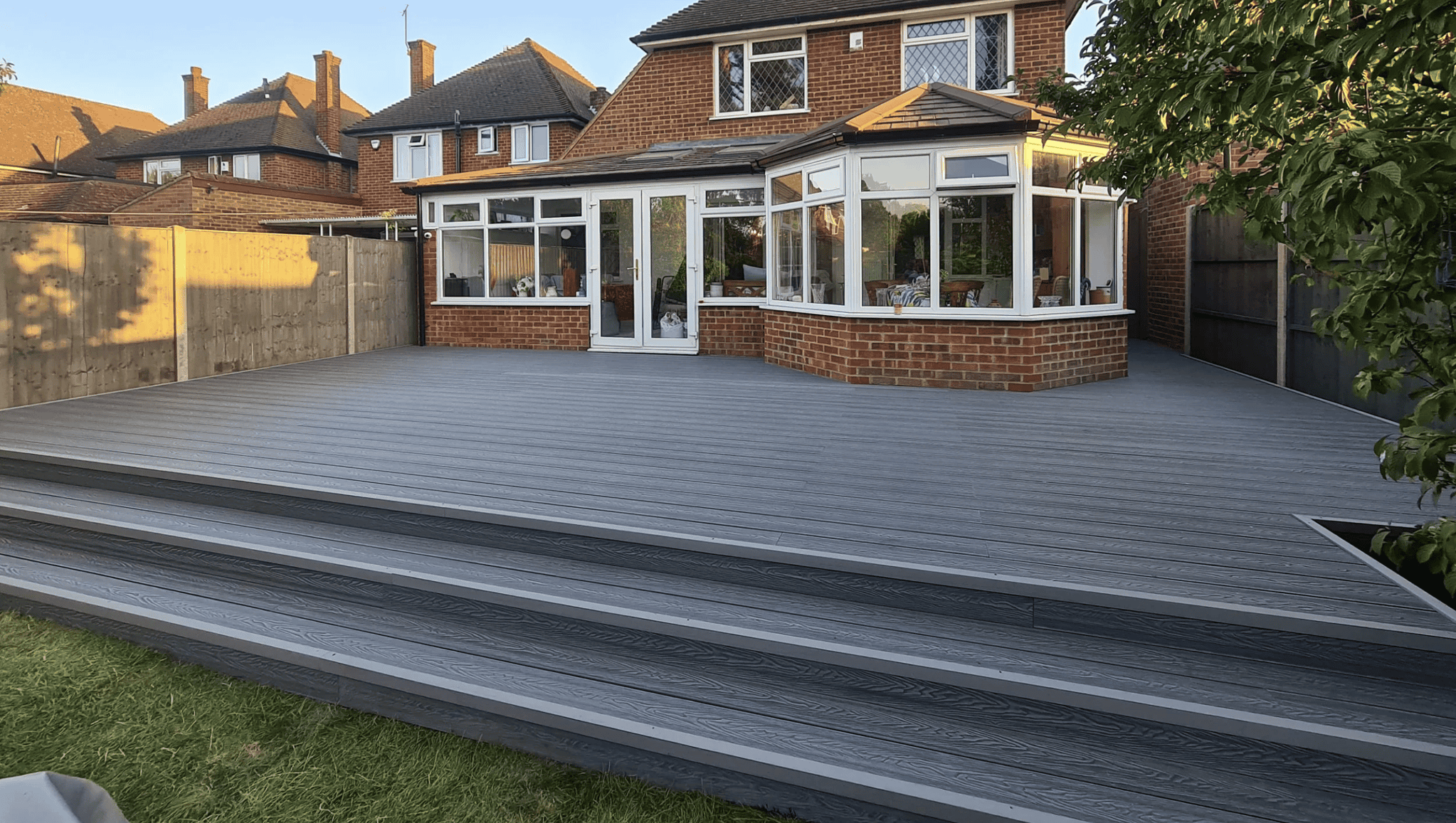
We provide professional decking installations throughout Battersea, creating outdoor areas that support the way each client wants to use their property. For a traditional SW11 home, this may involve building a comfortable dining terrace outside a kitchen extension or replacing an ageing timber deck with a cleaner, easier-to-maintain surface. Apartment and development projects may call for a more streamlined design suited to a balcony, podium garden or elevated terrace.
The layout has a significant effect on how a Battersea garden feels. Many terraced homes have relatively long, narrow plots where an oversized deck could dominate the available space. We plan the dimensions carefully, leaving enough room for planting, lawn, pathways or storage where required. Board direction can be used to visually widen the area, while contrasting borders or picture-frame details provide a defined finish without making the design feel busy.
Properties near Battersea Park and Prince of Wales Drive often draw inspiration from the area’s mature greenery and traditional architecture. Warm wood-effect boards can work well beside London stock brick, painted masonry and established planting. In newer developments around the Power Station, sharper grey, charcoal or lightly weathered finishes can complement glazing, metal balustrades and contemporary landscaping. The aim is not simply to follow a trend, but to choose a decking style that feels appropriate for the building and continues to look right as the garden develops.
Composite and Timber Decking for Battersea Gardens
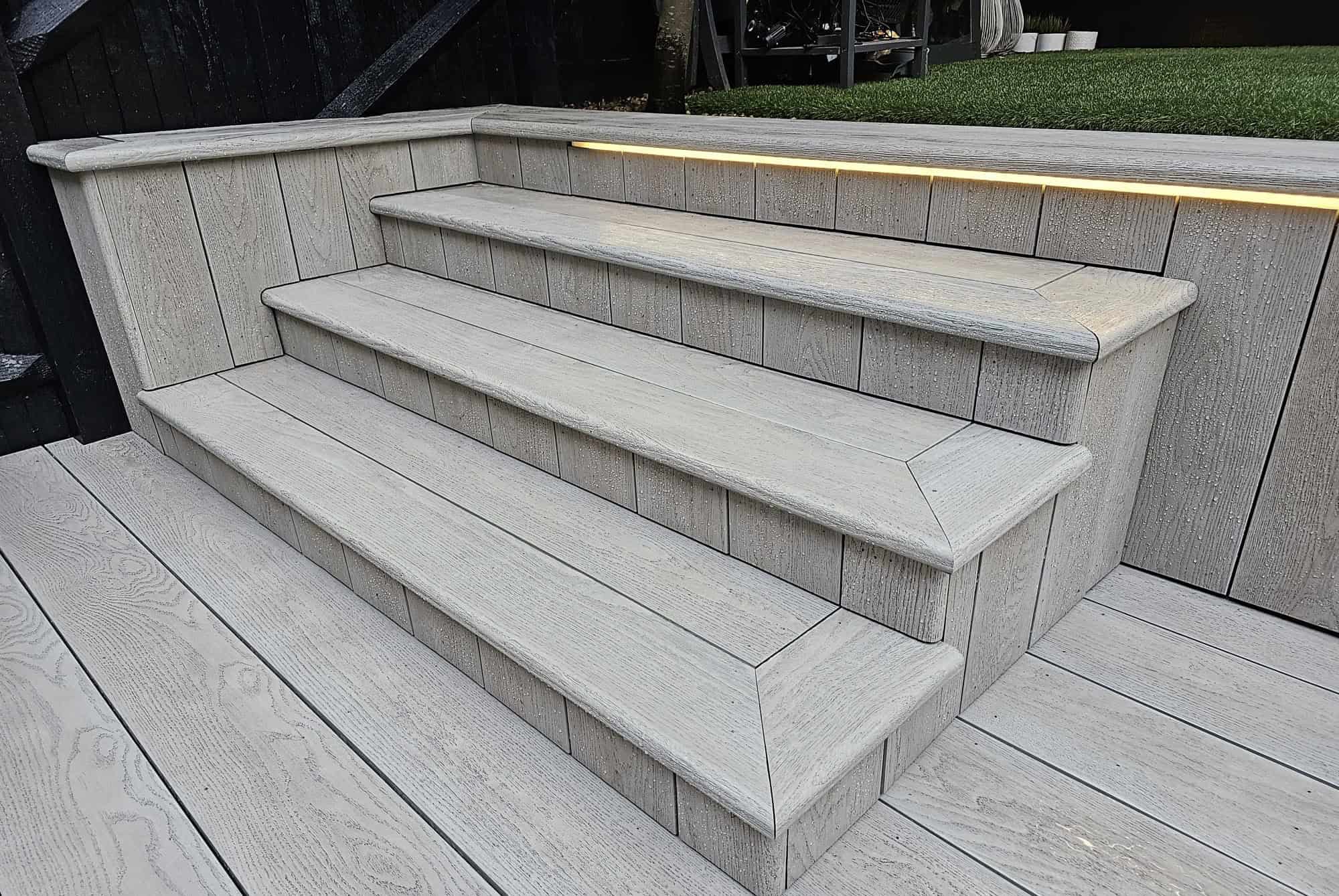
The choice between composite and timber decking depends on the preferred appearance, expected use and level of maintenance involved. Composite decking is particularly popular across Battersea because it offers the character of timber without the need for annual staining, painting or sealing. It is designed to resist moisture, splintering and everyday surface wear, making it a practical choice for family gardens, entertaining spaces and properties where outdoor maintenance needs to remain manageable.
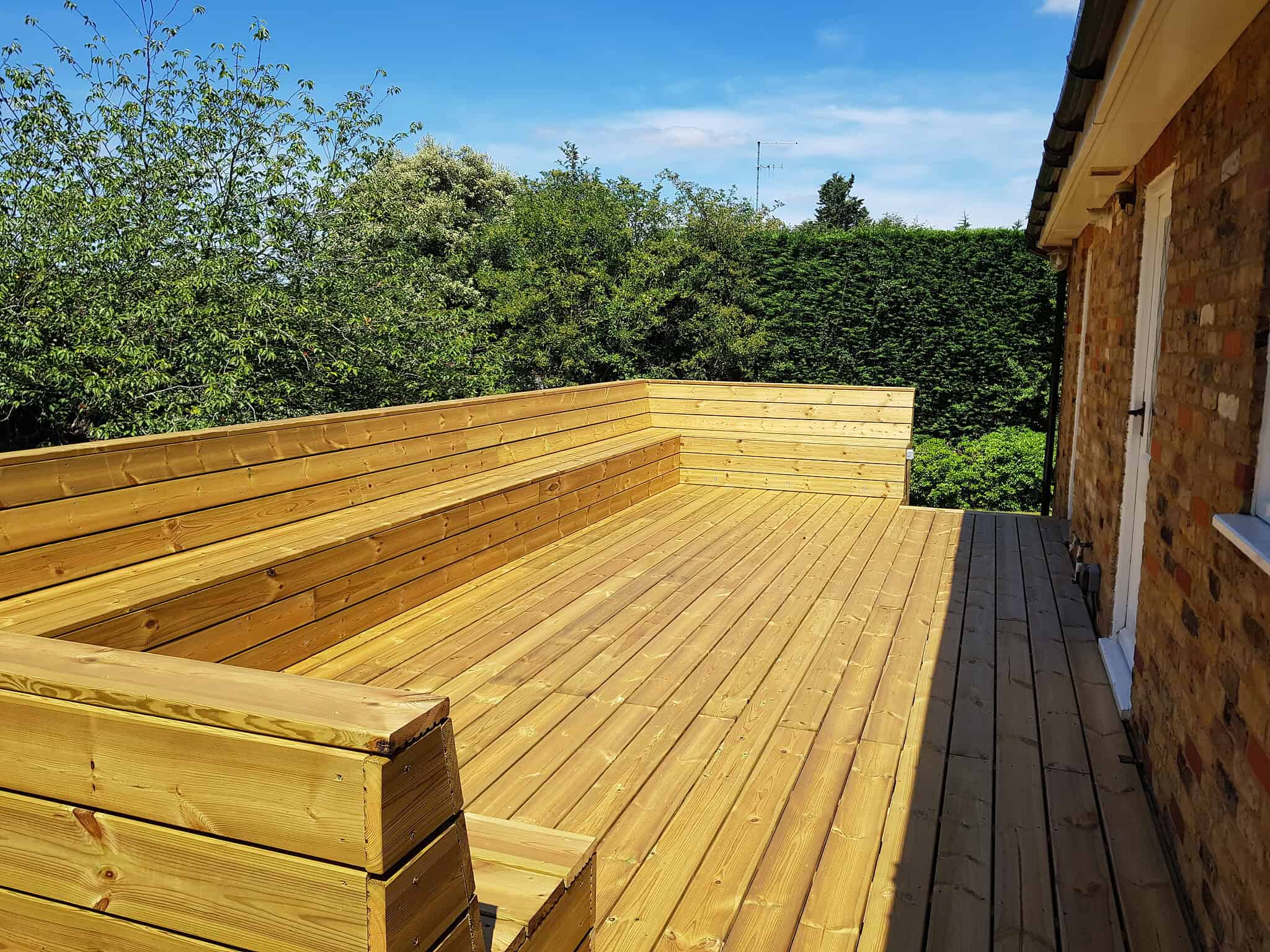
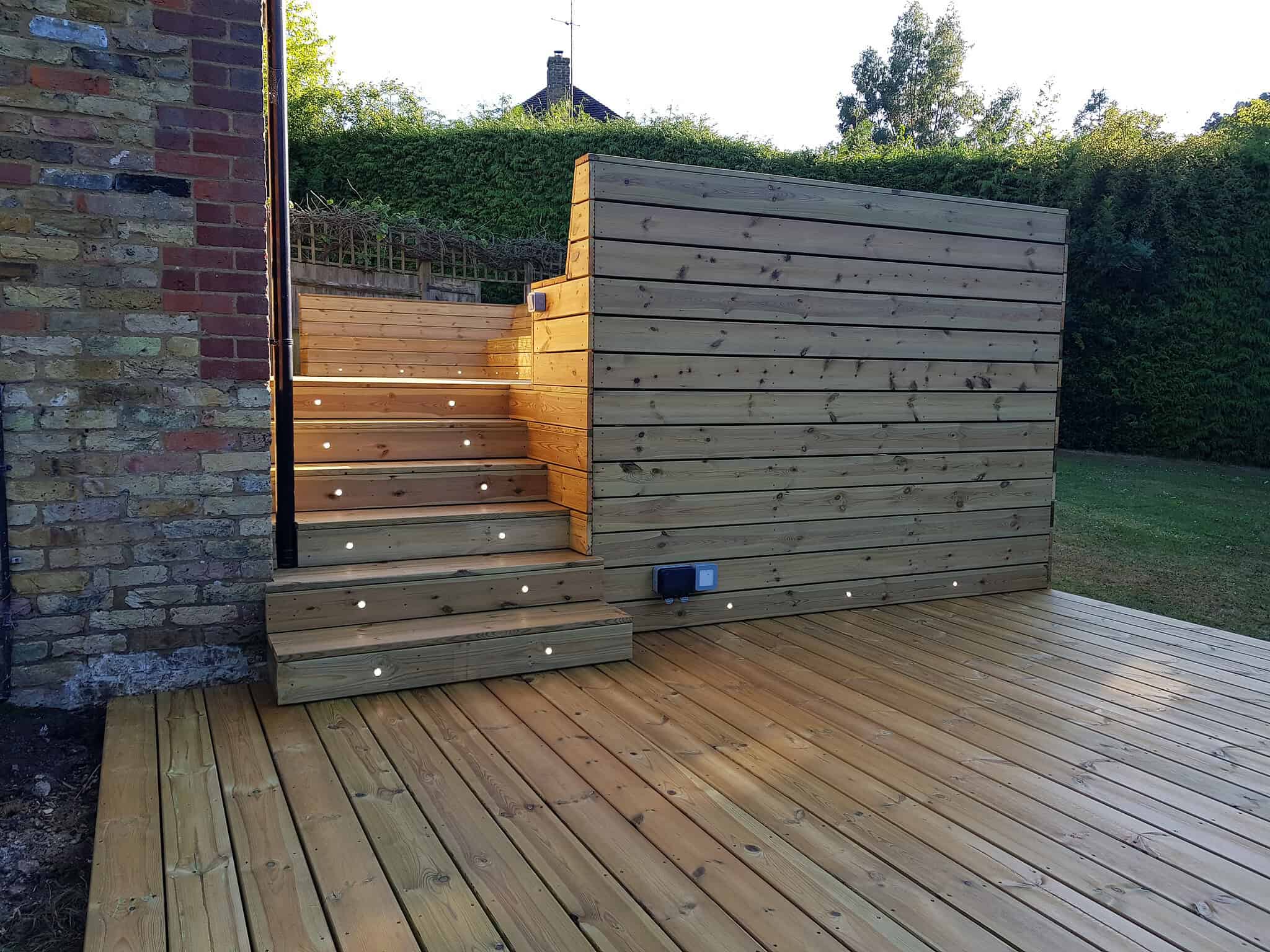
Timber decking can still provide an attractive result where a natural material is central to the garden design. Its individual grain and colour variation can bring warmth to period properties and softer planting schemes. It does, however, require more regular care to protect its appearance and condition. We can explain the practical differences clearly, helping clients choose boards that suit the property rather than pushing one material for every project.
A durable deck depends on much more than the visible boards. The supporting structure must account for the existing ground, finished height, drainage and ventilation. Battersea gardens can include old paving, concrete yards, basement lightwells and changes in level created by previous extensions. We assess what is already beneath the proposed deck and build an appropriate subframe so the surface remains stable, properly supported and comfortable underfoot.
Some parts of Battersea fall within designated conservation areas, including Battersea Square, Battersea Park and the Shaftesbury Park Estate. Wandsworth Council uses conservation-area appraisals when considering development and advises that Article 4 Directions can restrict works that might otherwise fall under permitted development. A straightforward ground-level deck may not require an application, but raised platforms, prominent terraces or work connected to a listed property should always be checked against the specific site and council guidance.
An Owner-Led Decking Installation from Planning to Completion